Precision-Engineered Multi Plug Sockets for Immediate Procurement
Engineered by Jiande Lyqen Technology Co., Ltd. strictly adhering to IEC 60884-1, CEE 7/4 (Schuko), and CEE 7/5 standards. Available for container-load and consolidate LCL distribution across the Lviv trade gateway.
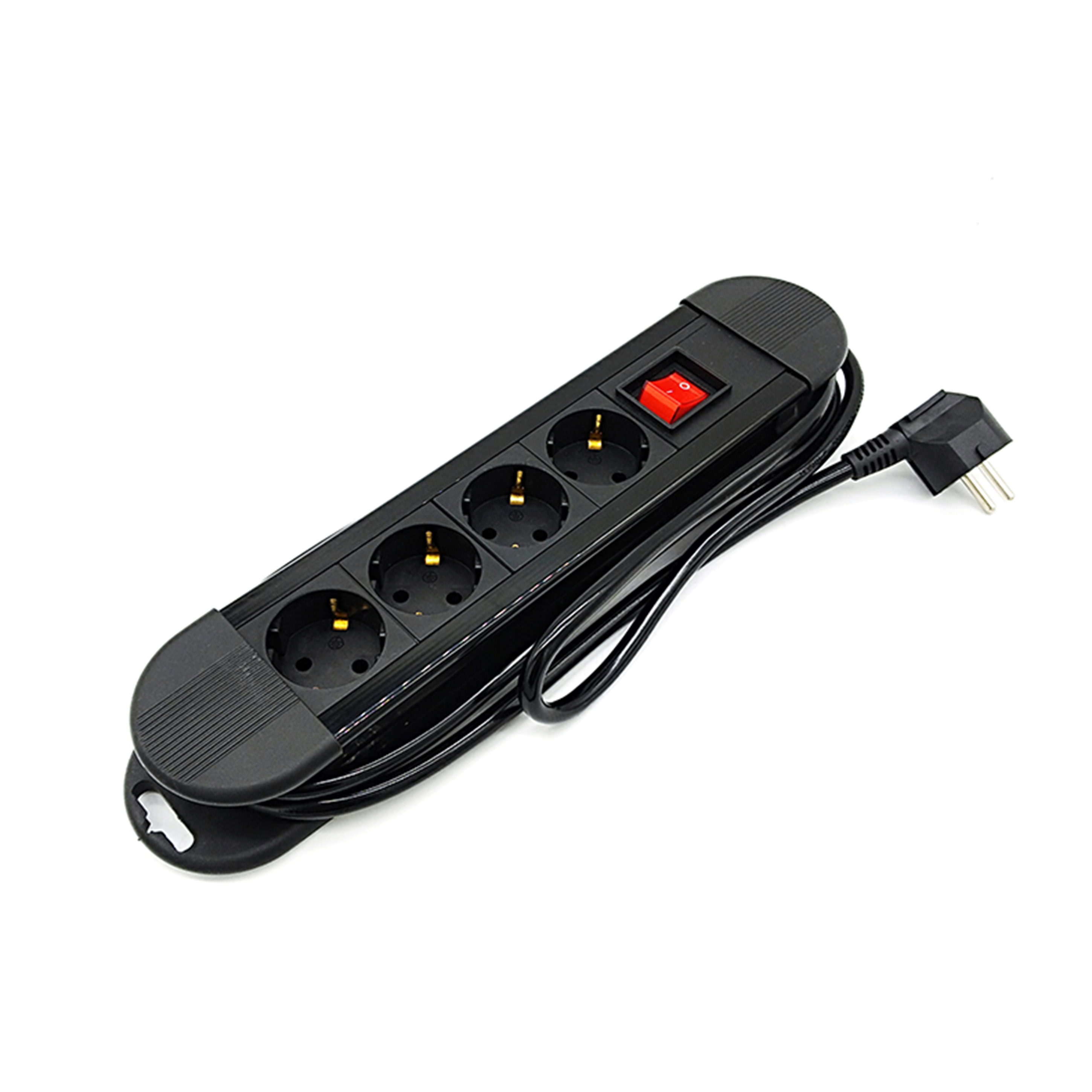
Luxury Pop Trendy Practical Cost-effective Swappable Pop Floor Waterproof Socket
- Pop-up damping mechanism with alloy casing
- Rated: 16A / 250V AC with modular inserts
- IP44 sealing for concrete and commercial screeds
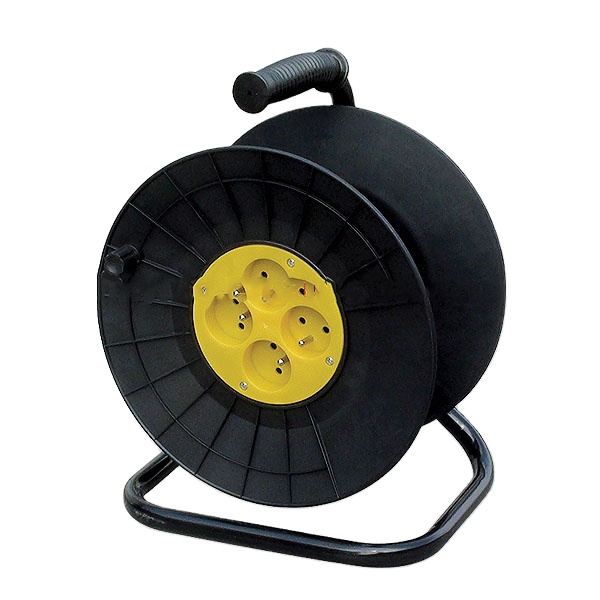
4 Way Dc Plug Home Electrical Outlet Retractable Electric Multi Plug Extension Cord Reel With Waterproof Cover
- 4 protected outlets with spring-loaded caps
- Internal bi-metallic thermal overload reset
- High-impact polypropylene co-polymer drum
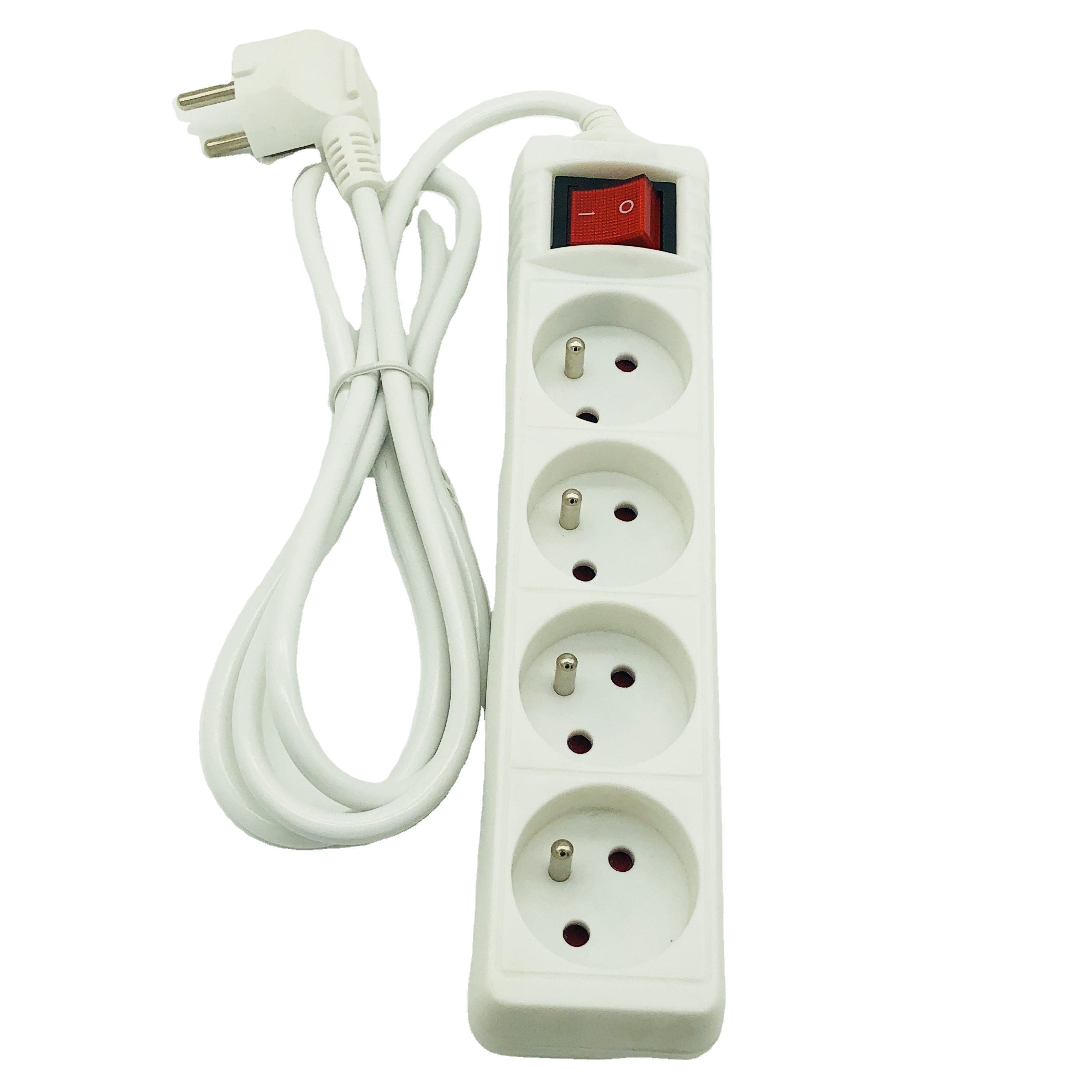
Quality 4 Ways French Type 16A/250V Power Strip Extension Socket with Switch with Child Protector
- CEE 7/5 female contacts with ground pin
- 750°C glow-wire resistant flame-retardant PC/ABS
- Integrated safety shutter child protection
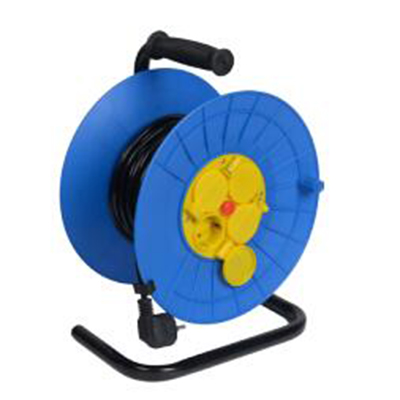
4 Ways European Electric Retractable Cable Reel Cable Organizers With Waterproof Cover
- Dual-earthing Schuko CEE 7/4 configuration
- H05VV-F or heavy-duty H07RN-F rubber cable ready
- Ergonomic winding crank & central brake
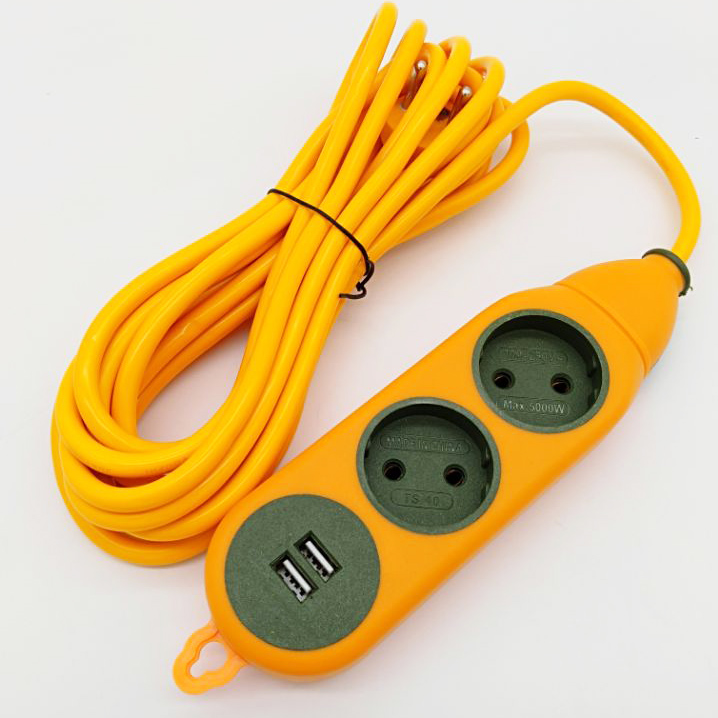
Individual Switches Light Uk Power Extension Cord Sockets Electrical 250v MOQ 300pcs
- Individual neon-illuminated 2-pole switches
- Solid copper busbar internal matrix conduction
- Fused plug configuration & BS 1363 standard
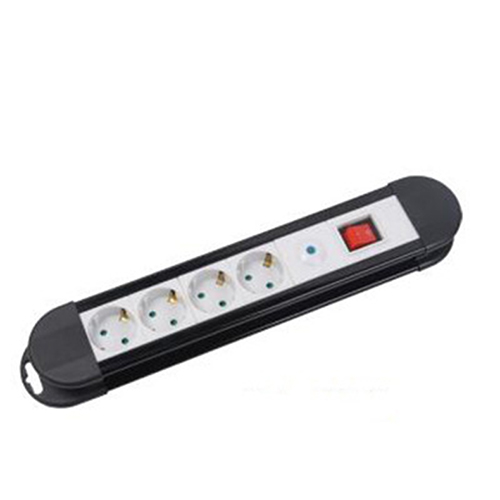
Promotional Excellent Quality Economic Standard Retro Multi Socket Extension
- Durable high-tensile phosphor bronze spring leaves
- Over 15,000 cycles plug insertion lifespan
- Optimal for high-volume commercial wholesale

French Type 3 Outlets Pop Colorful Power Strip Extension Plug Socket With Individual Switches With CE
- Type E configuration with dedicated switches
- Double insulated pure copper 3G1.5mm² cordage
- V-0 flammability class casing standard
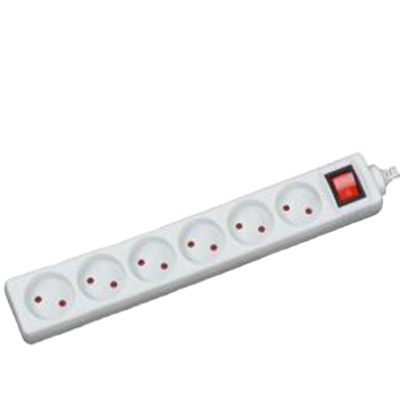
White 6-Outlet European Power Strip with On/Off Switch, Safe and Durable Power Cable Included
- 45° angled socket design for oversized adapters
- Master illuminated rocker switch (16A / 250V~)
- Flexible PVC jacket with strain relief boot
Industrial Production Integrity: Jiande Lyqen Technology Co., Ltd.
Founded in 2006 in Jiande, Hangzhou, Zhejiang, China, Lyqen Technology controls the full vertical spectrum of electrical wiring accessories, serving tier-one global distributors and emergency procurement operations.
TÜV Rheinland Assessed
Fully audited onsite by TÜV Rheinland with certified ISO 9001 quality management systems. Every shipment conforms directly with European CE, GS, and ETL technical directives.
Full In-House Integration
From pure electrolytic copper drawing, compounding flammability-resistant granules, stamping internal busbars, to injection molding and precision spot welding, no core process is outsourced.
13+ Years OEM / ODM Strength
Dedicated R&D engineering crew of 5–10 senior tooling specialists providing rapid prototype custom tooling, bespoke cable lengths, cold-resistant jackets, and custom branding within 15 days.
91%–100% Export Ratio
Over two decades of proven export performance throughout Central and Eastern Europe (Poland, Romania, Hungary, and Ukraine), accommodating flexible multimodal logistics via Polish rail and border transshipment.
Powering Western Ukraine: The Critical Role of High-Spec Multi-Plug Sockets in Lviv's Transforming Economy
A technical breakdown of grid fluctuations, auxiliary power transitions, building modernization, and B2B procurement standards across Lviv Oblast.
1. Executive Overview: Lviv as the Western Logistics and Industrial Hub
As the undisputed economic and humanitarian logistics capital of Western Ukraine, the city of Lviv and its surrounding industrial functional clusters (such as Horodok, Stryi, and the Rava-Ruska / Krakovets border economic zones) have experienced unprecedented infrastructural realignments. Hundreds of light industrial manufacturing plants, corporate entities, and IT firms have decentralized their operations toward the western boundary. Consequently, electrical demand within Lviv has undergone a profound structural shift: commercial complexes, modular housing installations, warehousing facilities, and hospital campuses require robust, fail-safe power distribution components capable of handling high electrical stress.
In this altered operational environment, standard retail-grade extension cords consistently fail. The proliferation of auxiliary generation equipment—such as commercial diesel gensets, lithium-iron-phosphate (LiFePO4) home battery backup systems, and hybrid solar inverters—introduces significant electrical harmonics, high initial inrush currents, and transient voltage spikes whenever the municipal grid toggles between centralized thermal/nuclear power and localized emergency generators. Chinese OEM manufacturing excellence, led by specialized producers such as Jiande Lyqen Technology Co., Ltd., provides the engineering bridge needed to supply verified CEE 7/4 (Schuko Type F) and CEE 7/5 (French Type E) multi-plug sockets engineered with pure copper busbars, flame-retardant thermoplastics, and bi-metallic thermal overload protection.
2. In-Depth Application Scenarios Across Lviv’s Key Sectors
To maximize both safety margins and commercial viability, electrical contractors, municipal purchasing agents, and hardware distributors in Lviv categorize multi plug sockets and extension systems according to four distinct operational environments:
Lviv Tech City & Co-Working Campuses
High-density workstations in modern business parks require multi-socket assemblies fitted with metal-oxide varistor (MOV) surge protection, dual-pole switches, and embedded USB-C Power Delivery (PD) modules. Power strips must maintain low impedance and suppress electrical noise that causes server and terminal reboots during grid oscillations.
Cross-Border Transshipment Parks
Warehouses along the M10 / M11 corridors handle palletized freight in unheated, dust-prone cross-docking bays. The requirement here centers on industrial cable drums with heavy-gauge H07RN-F polychloroprene rubber cords that maintain mechanical flexibility at sub-zero temperatures (-25°C) without cracking, protected by IP44 spring-hinged covers.
Old City Residential & Heritage Architecture
Lviv's UNESCO-protected historic center features solid brick and masonry buildings where trenching conduit into walls is strictly prohibited or structurally prohibitive. Surface-mounted retro multi-socket extensions and pop-up floor sockets provide a safe, code-compliant mechanism to distribute power without compromising architectural conservation rules.
3. Technical Vulnerabilities of Low-End Hardware Under Ukrainian Winter Loading
During harsh continental winters in Western Ukraine, residential and commercial power sockets are routinely driven to their maximum continuous thermal rating (3,680W at 230V~ 16A) by space heaters, thermal blowers, and water heaters operating simultaneously. Substandard multi-plug sockets manufactured with Copper-Clad Aluminum (CCA) or undersized stamped brass contacts experience severe joule heating at junction points. Over time, terminal relaxation causes arcing, high electrical resistance, carbonization, and catastrophic enclosure fires.
Lyqen Technology eliminates these systemic vulnerabilities by standardizing on oxygen-free high-conductivity electrolytic copper conductors (minimum 99.9% Cu purity) and phosphor bronze spring terminals. Phosphor bronze maintains its spring temper and contact pressure over tens of thousands of insertion cycles, ensuring low milliohm resistance and zero terminal relaxation even when subjected to thermal expansion cycles during peak winter heating.
Lyqen Industrial Engineering vs. Generic Market Multi-Sockets
| Engineering Parameter | Lyqen Industrial European Standard | Generic / Low-Cost Market Alternatives | Strategic Impact on Lviv Importers |
|---|---|---|---|
| Internal Conductor Material | Pure Electrolytic Copper / Phosphor Bronze Busbar | Copper-Clad Aluminum (CCA) or Scrap Brass | Prevents overheating, voltage drop, and fire under continuous 16A winter loads |
| Enclosure Flammability Rating | Polycarbonate / ABS self-extinguishing (UL94 V-0 / 750°C Glow-Wire) | Recycled Polystyrene or Low-Grade PP (UL94 HB) | Full compliance with DSTU / EN safety codes; self-extinguishes if arced |
| Thermal Overload Mechanism | Manual reset bi-metallic breaker (16A curve) | None, or unreliable single-use thermal fuses | Protects uncoiled cable reels from inductive heating during generator use |
| Cable Sheathing Flexibility | H05RR-F / H07RN-F Synthetic Rubber or Cold-Grade PVC (-30°C) | Standard PVC (rigid & brittle below 0°C) | Zero jacket splitting or short-circuits during freezing Lviv winter installations |
| Socket Contact Retention Force | >0.8 N per pin contact after 10,000 insertions | <0.2 N after fewer than 1,000 insertions | Prevents loose connections, arcing, and intermittent power drops to sensitive electronics |
Market Transformation in Western Ukraine: Sourcing Trends for 2025–2030
Key regulatory shifts, product architecture migrations, and geopolitical logistics corridors defining B2B electrical trade in Lviv.
Harmonization with EU Directives
Ukraine's regulatory convergence with the European Union requires all imported electrical components to meet the technical standards of the Low Voltage Directive (LVD 2014/35/EU) and RoHS 2.0. Distributors in Lviv are abandoning grey-market uncertified inventory in favor of factory-backed CE, GS, and ISO 9001 certified documentation for seamless retail distribution through chains like Epicentr K and Nova Liniya.
Surge Protection & Backup Integration
Due to frequent grid transitions between municipal thermal power, local substations, and private generators, multi plug sockets equipped with high-joule metal oxide varistor (MOV) surge suppression (up to 1,050 Joules) have transitioned from a luxury to an absolute necessity. Businesses and consumers prioritize models with integrated visual status LEDs indicating grounded circuit continuity and surge filter readiness.
Optimized Overland Silk Road Supply Chains
Maritime supply lines into Black Sea ports have redirected containerized electrical trade into Polish logistics corridors (Gdańsk / Gdynia) and rail connections via Małaszewicze. Shipments transition by bonded road transport through the Korczowa-Krakovets and Dorohusk-Yahodyn border gates directly into Lviv customs warehouses, reducing end-to-end transit times to under 30 days from Ningbo or Shanghai.
Frequently Asked Questions for Lviv Importers & Wholesalers
Direct, pragmatic engineering and trade answers addressing customs clearance, plug standards, grid durability, and factory-direct payment terms.
Ukraine officially operates on the 230V / 50Hz electrical system utilizing CEE 7/4 (Schuko Type F) with dual side-earthing clips, as well as Europlug (CEE 7/16 Type C) for ungrounded low-draw appliances. However, due to extensive equipment and vehicle imports from Poland and France, hybrid "CEE 7/7" multi-plug sockets that accept both German side-earth contacts and the French Type E male earthing pin are the absolute market standard. Lyqen Technology provides unified universal and hybrid CEE 7/7 socket strips that allow contractors to plug in any European appliance seamlessly without hazardous pin adapters.
Generator output frequently exhibits total harmonic distortion (THD) and minor voltage variations under fluctuating engine RPM. All Lyqen industrial cable reels and heavy-duty extension strips incorporate high-temperature rated copper windings, heavy conductor cross-sections (up to 3G2.5mm²), and integrated bi-metallic thermal cutoffs. This prevents heat buildup inside the reel drum when operating uncoiled near full load. For sensitive IT equipment powered by generator backup, we offer models with integrated EMI/RFI noise filters and high-response surge suppressors.
We handle FOB (Ningbo/Shanghai), CIF (Gdynia/Gdańsk or Constanța), and DAP Lviv delivery models. Most clients shipping to Western Ukraine route 40ft HQ containers via Polish ports (Gdynia/Gdańsk) or utilize China-Europe Railway Express freight to transit hubs in Poland (Małaszewicze/Warsaw). From Poland, bonded trucks cross the border directly to the Lviv Regional Customs Terminal (e.g., Horodok or Lviv-Pivdennyi). Our documentation package includes fully validated Bills of Lading, CE Declarations of Conformity, Commercial Invoices, Packing Lists with detailed HS codes (8536.69.90 / 8544.42.90), and Certificate of Origin documents for customs clearance.
For standard European models with client-branded packaging (color retail box or hanging blister card), our baseline MOQ starts at only 100 to 300 pieces for heavy-duty cable reels, 300 to 500 pieces for classic 3-way to 6-way power strips, and 200 pieces for floor sockets. Initial production lead time for custom tooling or customized pad printing is generally 25 to 30 days, with repeat orders completed in under 20 days, supported by our 6 high-speed automated production lines.
Yes. While conventional PVC cables harden and become susceptible to sheath cracking at temperatures below -5°C, Lyqen manufactures extension assemblies using H05RR-F and H07RN-F vulcanized synthetic rubber (neoprene) compounds. These cables maintain elastic elongation, oil resistance, and mechanical abrasion resilience down to -30°C, making them suitable for unheated construction worksites, agricultural installations, and municipal infrastructure repairs across Western Ukraine.
Our products carry formal European CE (LVD/EMC), German GS (Geprüfte Sicherheit), and North American ETL certifications. Furthermore, our factory operations are certified under ISO 9001 and have undergone comprehensive onsite audits by TÜV Rheinland. Test reports covering pin insertion retention, temperature rise under continuous 16A loading, glow-wire flame resistance (750°C), and insulation resistance are provided with every wholesale export consignment.